Marco Donnarumma – De la musique biophysique à la configuration humaine-machine
Pavillon de la Faculté de musique, 200, avenue Vincent-d’Indy , b-379
Montréal (QC) H2V 2T2
Description
À noter : la conférence sera donnée en anglais
Comment les machines peuvent-elles aider à comprendre l’expressivité du corps humain et, inversement, comment le corps peut-il permettre de mieux saisir l’agentivité des machines ?
Cette question – au cœur des relations contemporaines entre l’humain et la machine – pose les défis artistiques, technologiques et musicaux qui façonneront la culture au cours de la prochaine décennie.
Dans cette conférence, je présenterai un parcours de recherche qui, au fil des quinze dernières années, m’a conduit à explorer les notions d’agentivité humaine et computationnelle, en intégrant la recherche artistique à des méthodes et techniques issues de l’informatique physiologique, de l’apprentissage automatique et de l’intelligence artificielle, de la robotique, de l’ingénierie, de la musique et de la psychoacoustique.
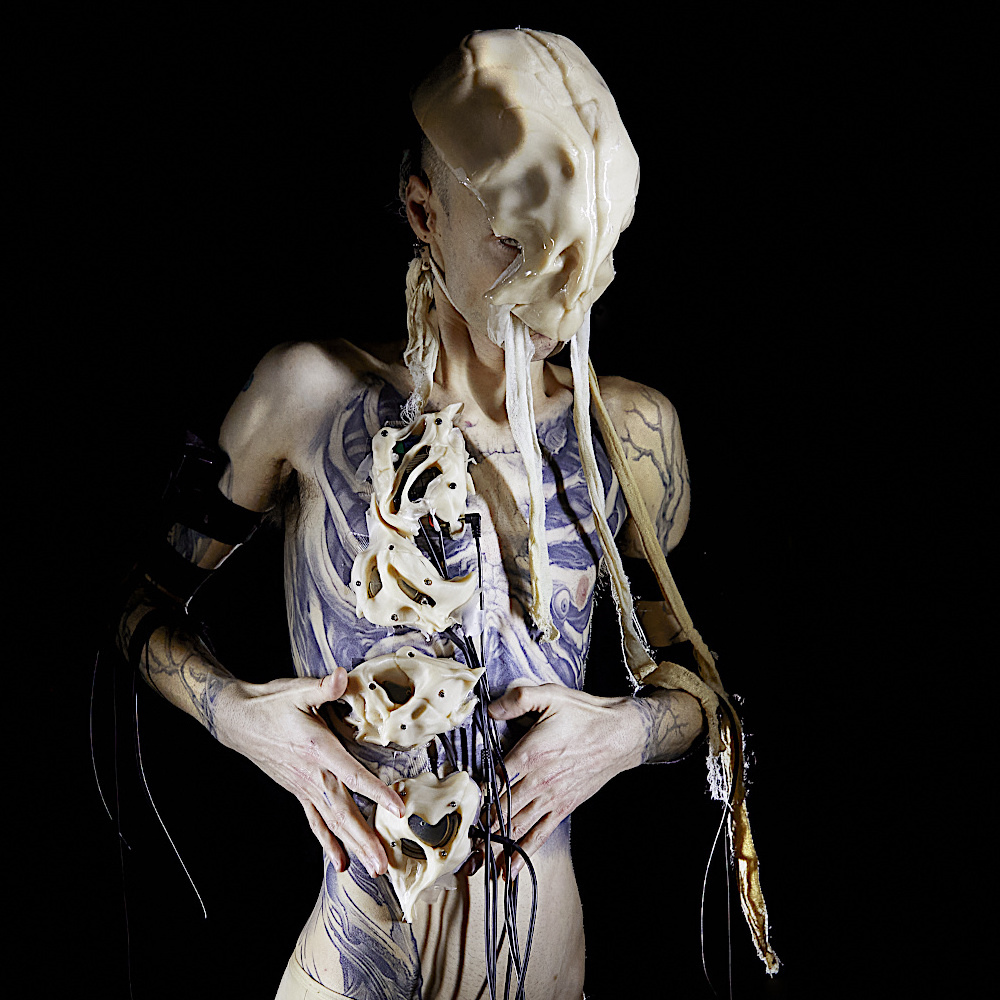
De nature transdisciplinaire, ma pratique se manifeste sous diverses formes artistiques : œuvres de musique biophysique, installations de cyberart et performances scéniques médiées par la machine.
L’accent est mis sur l’analyse et la création de formes alternatives d’incarnation humaine qui reposent sur le son en tant qu’affect. Dans ce contexte, les corps humains et les machines deviennent interdépendants : ils s’accordent et s’influencent mutuellement, manipulent leur matérialité respective et, ce faisant, deviennent tous deux des sujets actifs du processus de création artistique – une condition que j’appelle configuration humain-machine.
Cette approche ouvre une nouvelle perspective sur la relation entre incarnation humaine et agentivité machinique.
D’une part, ce que l’on considère comme le « corps humain normal » apparaît comme une construction fictive, révélant ainsi la multiplicité intrinsèque des expériences corporelles.
D’autre part, les machines ne se limitent pas à assister le corps humain : elles sont intégrées à celui-ci, entraînant des transformations dans la perception, l’expression et l’autonomie.
Marco Donnarumma est artiste, inventeur et théoricien.
Son œuvre confronte les politiques normatives du corps par des contre-récits radicaux, où les corps oscillent entre contrôle et agentivité, présence et absence, grâce et monstruosité.
Il est reconnu pour son usage du son, de l’intelligence artificielle, des biocapteurs et de la robotique, transformant le corps en un lieu de résistance et de métamorphose.
Ses œuvres ont été présentées dans trente-sept pays à travers l’Asie, l’Europe, l’Amérique du Nord et du Sud, et lui ont valu de nombreuses distinctions, notamment le titre d’Artiste de l’année scientifique 2018 décerné par le ministère fédéral allemand de la Recherche et de l’Éducation, ainsi que le Prix Ars Electronica – Award of Distinction in Sound Art 2017.
En 2024, il a reçu une bourse ZER01NE Creator et a été désigné comme un pionnier des arts performatifs intégrant les technologies avancées par le grand quotidien autrichien Der Standard.
Ses écrits ont été publiés dans Frontiers in Computer Science, Computer Music Journal et Performance Research, entre autres.
Son plus récent chapitre de livre, coécrit avec Elizabeth Jochum, paraîtra dans Robot Theaters (Routledge).
Avec Margherita Pevere, il codirige le groupe de performance Fronte Vacuo.
https://marcodonnarumma.com
https://scholar.google.com.hk/citations?user=qMV5UIAAAAAJ&hl=en
How can machines help understand the human body’s expressivity and, conversely, how can the body help understand machine agency? This question – central to contemporary human-machine relations – frames challenges in art, technology and music that will shape culture over the coming decade. In this talk I will present a research trajectory that through the past fifteen years brought me to explore questions of human and computational agency by integrating artistic research with methods and techniques from physiological computing, machine learning and AI, robotics, engineering, music and psychoacoustics. Transdisciplinary in nature, my practice manifests itself in multiple artistic formats, such as pieces for biophysical music, cyberarts installation and machine-mediated stage performances. In focus is the analysis and creation of alternative forms of human embodiment that rely on sound as affect. Here human bodies and machines are co-dependent: they attune to and influence each other, manipulate their respective materiality, and, in doing so, they both become active subjects in the process of artistic creation; a condition I call human-machine configuration. This approach unravels a new perspective on the relation of human embodiment and machine agency. On one hand, what is considered the ‘normal’ human body is revealed as a fictional construction, allowing thus the intrinsic multiplicity of corporeal experiences to rise to the foreground. On the other, machines are shown to not only aid a human body, but to be incorporated by it, driving changes in perception, expression and autonomy
Marco Donnarumma is an artist, inventor and theorist. His oeuvre confronts normative body politics with uncompromising counter-narratives, where bodies are in tension between control and agency, presence and absence, grace and monstrosity. He is best known for using sound, AI, biosensors, and robotics to turn the body into a site of resistance and transformation. He has presented his work in thirty-seven countries across Asia, Europe, North and South America and is the recipient of numerous accolades, most notably the German Federal Ministry of Research and Education's Artist of the Science Year 2018, and the Prix Ars Electronica's Award of Distinction in Sound Art 2017. Donnarumma received a ZER01NE Creator grant in 2024 and was named a pioneer of performing arts with advanced technologies by the major national newspaper Der Standard, Austria. His writings are published in Frontiers in Computer Science, Computer Music Journal and Performance Research, among others, and his newest book chapter, co-authored with Elizabeth Jochum, will appear in ‘Robot Theaters’ by Routledge. Together with Margherita Pevere he runs the performance group Fronte Vacuo.
https://marcodonnarumma.com
https://scholar.google.com.hk/citations?user=qMV5UIAAAAAJ&hl=en