Conférence du vendredi 7 novembre 2025
Complexe des sciences, 1375, avenue Thérèse-Lavoie-Roux , a3521.1
Montréal (QC) Canada H2V 0B3
Description
Do transmons dream of entangled sheep ? Erik Sorensen (McMaster University)
Abstract:
Entanglement is a key aspect of quantum mechanics that has led to a number of developing 'quantum' technologies. For instance, entanglement is the resource behind the massive quantum parallelism exploited in quantum computers, and it is the property that might lead to the development of novel quantum materials. Even though entangled states are simple to describe, the implications are exceedingly hard to grasp. In a celebrated result, John Bell showed that if repeated measurements of an entangled system leads to a violation of a simple inequality then non-local
correlations must be present, the so called 'spooky' action at a distance. That quantum mechanics indeed does violate Bell's inequality has been demonstrated many times. Amazingly (at least to me), anyone can today get an account on a quantum computer, entangle their own qubits, and verify that Bell's inequality is violated. The specific realization of a qubit in many the exisiting quantum computers is the transmon, a technology in part made possible by the work of the 2025 nobel prize
winners, hence the transmon in the title. In this talk I will discuss Bell's inequalities from the point of view of building a classical system to violate them, and demonstrate (hopefully live) that they are violated in simple quantum circuits that can be run on quantum computers using python (Qiskit) scripts.
Bio:
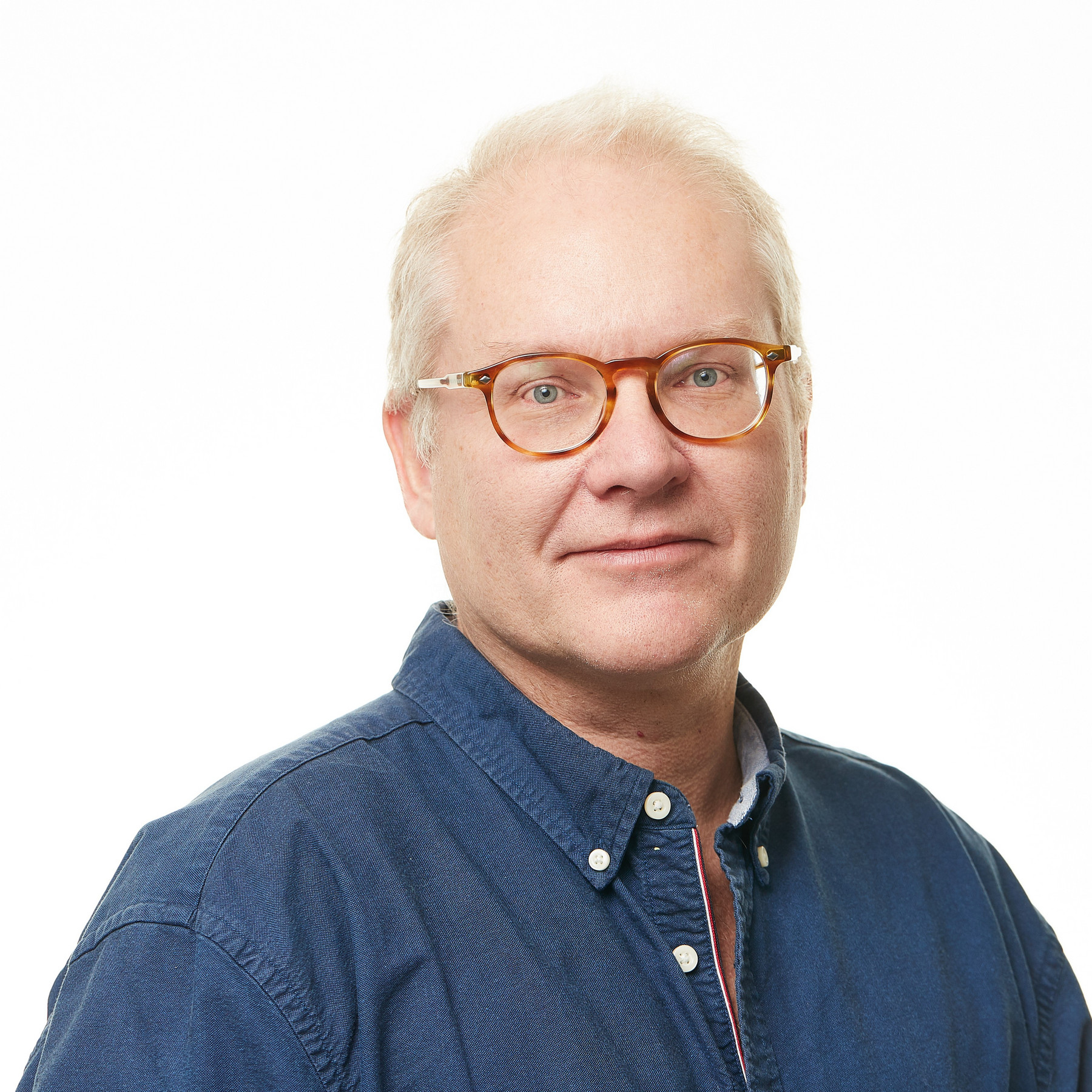
Erik Sorensen is a Professor at McMaster University in the department of Physics and Astronomy. He received his MSc from the University of AArhus, Denmark and his Ph. D. degree from the University of California Santa Cruz in 1992. After postdoctoral work at the UBC and University of Indiana, he joined Universite Paul Sabatier in Toulouse, France in 1996 before moving to McMaster University in 2001 as a SHARCnet chair in computational physics. His research centres on
computational techniques for studying quantum materials and trongly correlated systems. A special focus in recent years has been the use of quantum information tools for the characterization of such quantum materials and in particular entanglement as it arises in these systems.