Conférence du vendredi 21 novembre 2025
Complexe des sciences, 1375, avenue Thérèse-Lavoie-Roux , a3521.1
Montréal (QC) Canada H2V 0B3
Description
A Non-Invasive Platform Technology for Bio-Sensing or Drug Delivery Using Transdermal Patches - Makarand Paranjape (Georgetown University)
Abstract Current medical practice for diagnosing, tracking, and treating many disease conditions requires biomolecular or biomarker monitoring in bodily fluids, typically blood or urine. The effectiveness of these techniques is often limited by their collection. For example, urine testing can be intrusive, time delayed, and can be prone to sample tampering. Finger pricks and blood draws are painful and invasive, with the latter requiring medical visits and time-consuming post-processing. Microfabrication techniques have turned to the use of microneedles, which are often referred to as being noninvasive, even though they penetrate the skin and are not pain-free. Typically, the pain associated with microneedle insertion scales with length and number of needles in an array. Furthermore, they are susceptible to fracture and, as the physics of lying on a bed of nails illustrates, arrays of microneedles often require significant insertion force.
As an alternative, our attention turned to accessing another body fluid for diagnostic health monitoring in a completely non-invasive and pain-free manner. The technology is worn on the skin, like a Bandaid or dermal patch, and relies on through-the-skin (transdermal) fluid sampling. This diagnostic patch is also being re-engineered as a therapeutic patch platform technology for transdermal drug delivery of FDA-approved drugs that normally do not cross the skin barrier.
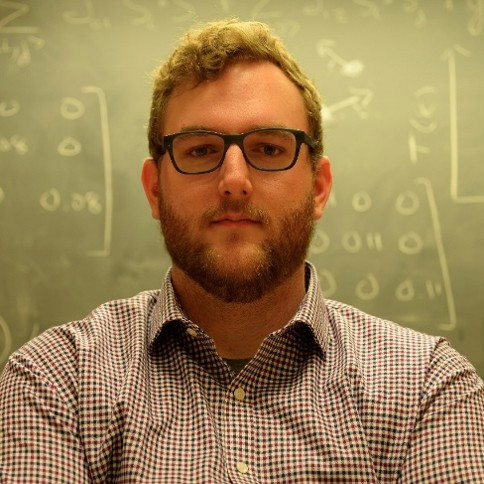
Bio Makarand Paranjape received his BSc (1986), MSc (1990), and PhD (1993) from the University of Alberta (Edmonton, Canada) in Electrical Engineering with specializations in semiconductor device physics, microelectronics, microsensors, and microelectromechanical systems (MEMS).
He is presently an Associate Professor in the Physics Department at Georgetown University (Washington, D.C.) having joined the faculty in 1998, and is the Director of the Georgetown Nanoscience and Microtechnology Lab (GNmLab), a multi-user cleanroom facility. Paranjape also holds an Affiliate Scholar position in Georgetown’s Center for Neuro-Engineering, and is a member of both the Physics Department’s Institute for Soft Matter Synthesis and Metrology, and Georgetown’s Global Health Institute, Maternal and Child Health Collaborative. From 2020-2022, through the National Science Foundation, he was awarded a Scholar-in-Residence position at the U.S. Food and Drug Administration (Silver Spring, MD), in the Office of Science and Engineering Laboratories, where he conducted research on non-invasive detection of opioid biomarkers. Prior to his faculty position, he was a post-doctoral researcher at Concordia University (Montreal, Canada), Simon Fraser University (Vancouver, Canada), and the University of California (Berkeley, CA). From 1995-1998, he held an engineering consulting position at the Istituto per la Ricerca Scientifica e Tecnologica (IRST) in Trento, Italy.
Dr. Paranjape serves as Associate Editor for Biomedical Microdevices and in 2021, was the journal’s Interim Managing Editor. He has served on panels for the National Science Foundation (NSF), the National Institutes of Health (NIH), the Natural Sciences and Engineering Research Council of Canada (NSERC), US Food and Drug Administration (FDA), and the US Defense Threat Reduction Agency (DTRA). In 2011, Dr. Paranjape was awarded the Georgetown College Dean’s Teaching Award for outstanding achievement in the teaching of undergraduate students. Dr. Paranjape’s inventions and patent portfolio in micro-/nano-technologies earned him Georgetown University’s Award for Outstanding Contribution in Innovation and Commercialization in 2013, and the Office of Technology Commercialization Recognition Award in 2025. Since 2014, he has been a member of the National Academy of Inventors and in 2024, was inducted as a Fellow of the National Academy of Inventors.